Muck Away Services in Central Scotland
Home / Muck Away
What we do
When excavation starts, spoil needs to move — fast. Soil, clay, subsoil, rubble, and inert construction waste piling up on a live site slows everything down, creates safety hazards, and eats into programme time.
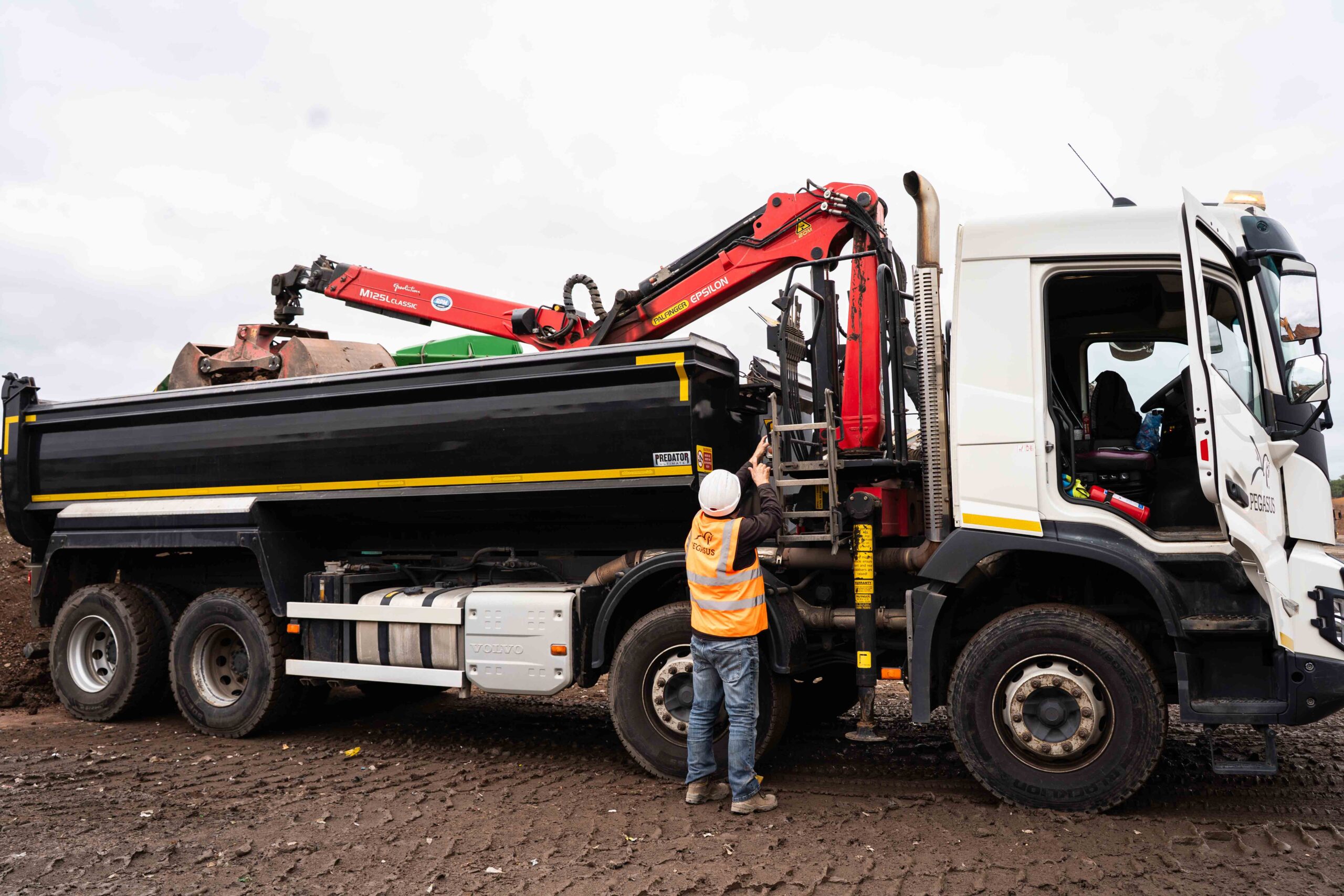
Our muck away service keeps material moving off your site as quickly as it comes out of the ground. We operate modern 8-wheel grab lorries across Perth, Glasgow, Edinburgh, Dundee, Stirling, Falkirk, and the wider Central Scotland region — self-loading, fast-turning, and fully documented with waste transfer notes on every load.
No excavator needed to load us. No skip waiting times. No double-handling.
How Muck Away Works
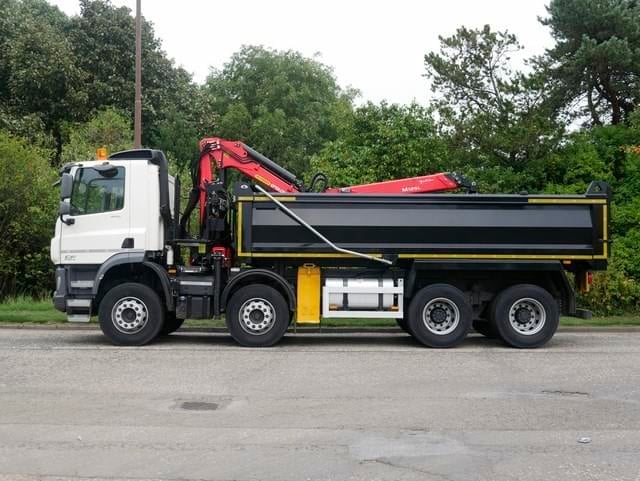
Our grab lorries are self-loading — the onboard hydraulic arm picks directly from spoil heaps, stockpiles, or loose arisings without needing a separate excavator and operator standing by to load. This makes us faster and more cost-effective on sites where plant time is expensive.
The arm also gives us reach — over site hoarding, fencing, and level changes — so we can collect from areas that a tipper or walking-floor trailer simply cannot access.
A full load of soil or rubble — typically 15–16 tonnes — is collected, documented, and off-site in a single operation. We issue a waste transfer note on every load as standard.
What Muck Away We Take
Accepted materials:
- Excavated topsoil and subsoil
- Clay and boulder clay
- Hardcore and compacted aggregate
- Rubble, brick, and masonry
- Concrete — broken slabs, footings, foundations
- Concrete blocks, precast panels, and concrete roof tiles
- Sand and gravel arisings
- General inert construction waste
Not accepted:
- Hazardous waste — asbestos, contaminated soil, chemically treated material
- Liquid waste, oils, or solvents
- General household waste
- Green waste (see our Green Waste Removal service)
- Timber and wood waste (see our Waste Wood Disposal service)
- Mixed loads containing hazardous elements
If you’re unsure whether your material qualifies as inert, call us before booking and we’ll advise. For sites with potential contamination — brownfield, former industrial, or petrol station sites — a site investigation report will be needed before we can accept material.
Where Muck Away Is Used
Housing developments
Groundworks and civils contracts
Commercial and industrial developments
Road and infrastructure works
Large landscaping projects
Domestic extensions and groundworks
Why Use a Grab Lorry for Muck Away?
| Grab lorry | Tipper / walking floor | |
|---|---|---|
| Requires excavator to load | No — self-loading arm | Yes |
| Accesses over walls / fencing | Yes | No |
| Suitable for tight access | Better reach flexibility | Limited by vehicle positioning |
| Spoil heap loading | Direct from heap | Requires loading plant |
| Cost when no excavator on site | Lower — no separate plant | Higher — excavator needed |
A tipper or walking-floor trailer is the right choice when you have a large excavator already working and high sustained volumes. For most construction and groundworks sites where flexibility and self-loading matter, a grab lorry wins on both cost and speed.
Muck Away
Common Questions
What is muck away?
Muck away is the removal of excavated soil, spoil, and inert construction waste from a site. It is a standard part of groundworks, foundation, drainage, and civils operations — keeping the site clear so work can continue without material building up underfoot.
Do I need an excavator on site for you to load?
No. Our grab lorries are self-loading — the onboard hydraulic arm collects directly from spoil heaps and stockpiles without a separate machine or operator. This makes grab hire particularly cost-effective on sites where you don’t already have an excavator working.
What types of material can you remove?
We accept inert materials including excavated soil, clay, subsoil, hardcore, rubble, brick, broken concrete, concrete blocks, precast panels, and general inert construction waste. We do not accept hazardous materials, contaminated soil, green waste, timber, or mixed loads containing hazardous elements.
Can you handle contaminated soil?
No. Contaminated soil requires specialist handling, specific licensed disposal facilities, and additional documentation beyond a standard waste transfer note. If you suspect contamination on your site, you will need a specialist contractor. We are happy to advise on what to look for if you are unsure.
How many loads will my job need?
This depends on the volume and type of material. A standard grab lorry carries 15–16 tonnes or approximately 20 cubic metres per load. Give us your approximate volume or the size of the excavation and we’ll estimate the number of loads required — though volumes often change once digging starts, so we stay flexible on site.
Do you provide waste transfer notes?
Yes — a waste transfer note is issued on every load as standard. We are registered with SEPA as licensed waste carriers. Copies of our registration and insurance are available on request for your compliance records.
Can you combine muck away with aggregate delivery?
Yes. In many cases we can deliver aggregate on the outbound run and collect muck away on the return in a single vehicle movement. Ask us about combined runs when you enquire.
How much does muck away cost?
Pricing is based on material type, volume, your site location, and whether disposal surcharges apply for certain material types. We provide a clear, fixed quote before we start. Contact us with your postcode and estimated volumes for a price.
Get a Quote Today
AREAS WE COVER
Where We Work
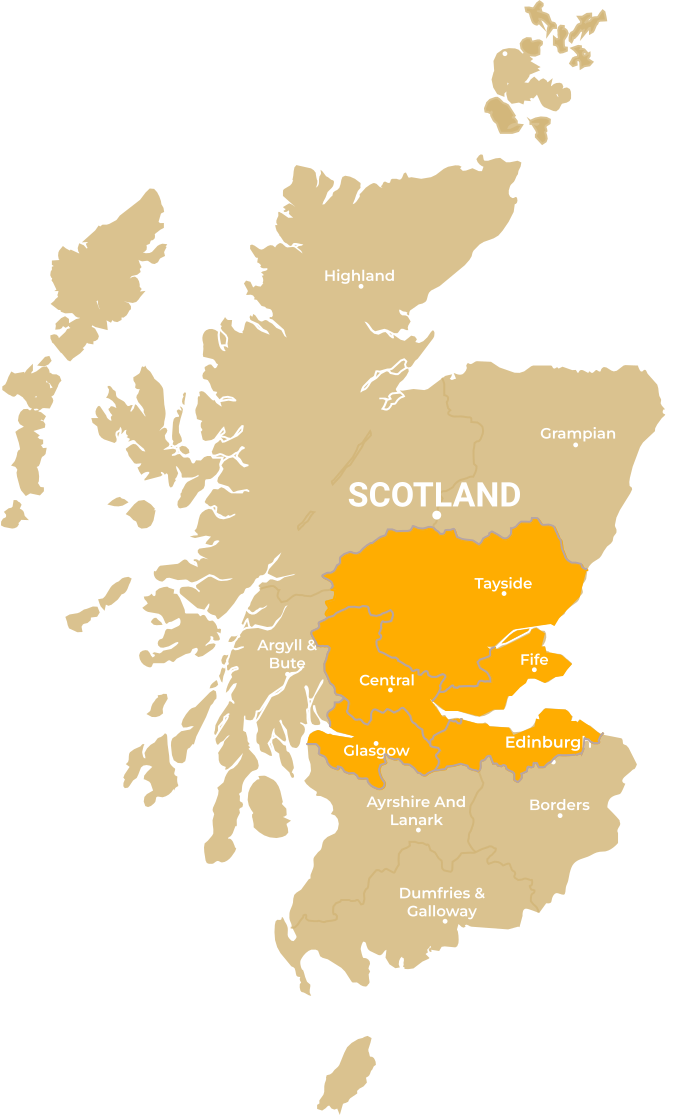
Based in Central Scotland, we regularly serve construction, groundworks, landscaping, and domestic clients across:
Perth · Glasgow · Edinburgh · Dundee · Stirling · Falkirk
And across the wider areas of Perthshire · Fife · Angus · Tayside · Forth Valley
Not sure if we cover your postcode? Check our coverage page or call us directly — we’ll give you a straight answer.
Responsible Disposal
Inert materials such as clean soil, rubble, and concrete are not landfill — they have value as fill, recycled aggregate, and processed secondary material. We route material to licensed facilities where it can be reprocessed and reused wherever possible, reducing the volume going to landfill and keeping disposal costs down.
All loads are documented with waste transfer notes confirming legal disposal at a licensed facility.